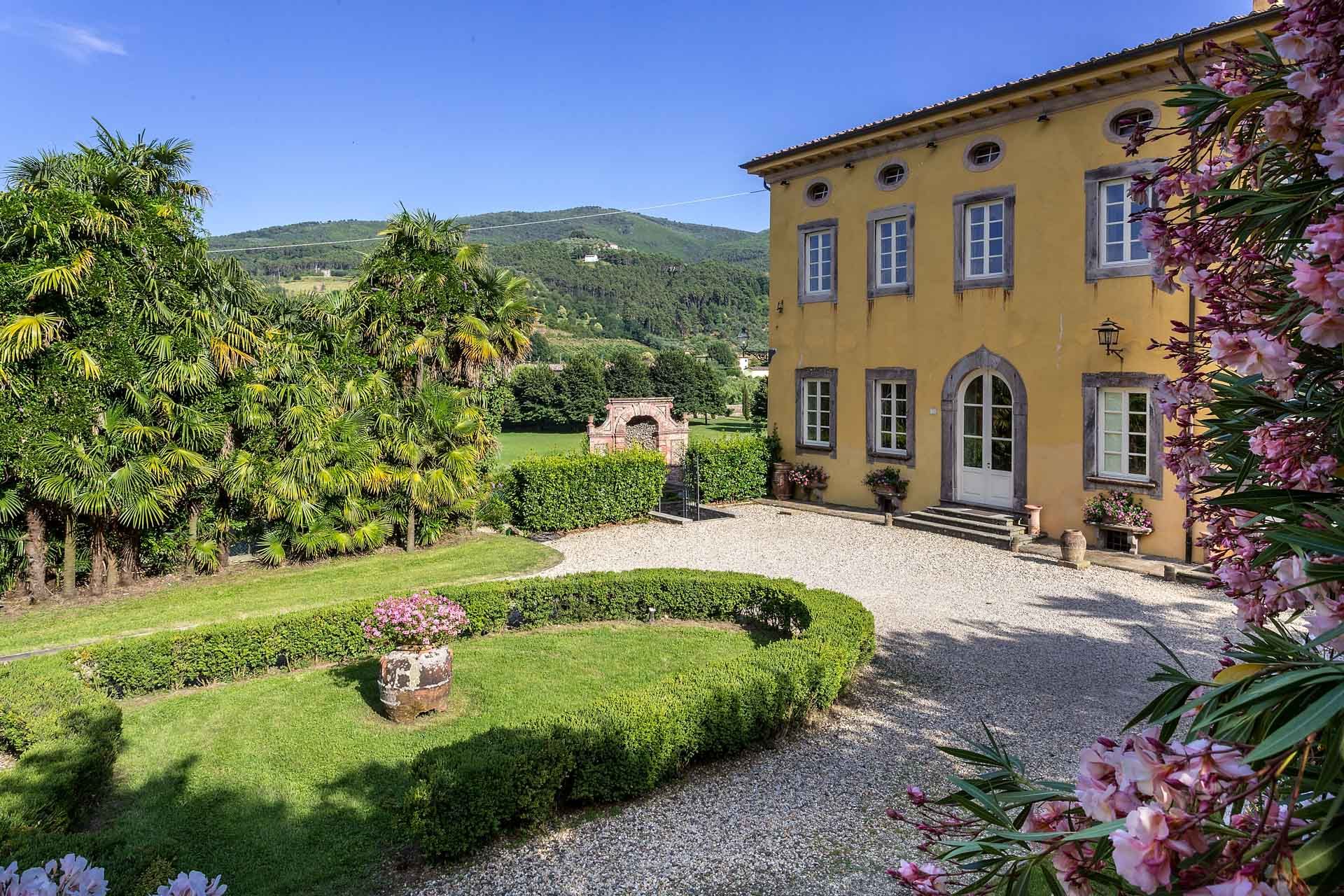
Villa Controni, situated beneath Monte Pisano on the southern periphery of Lucca, stands as a storied 19th-century Lucchese estate ensconced within a breathtaking landscape of terraced olive groves, graceful Italian gardens, and pine-crowned hilltops adorned with the remnants of a castle. Sweeping vistas extend across Lucca and Nottolini’s aqueduct, while a charming walled garden provides a tranquil backdrop for the swimming pool and summerhouse, complete with a fitness room.
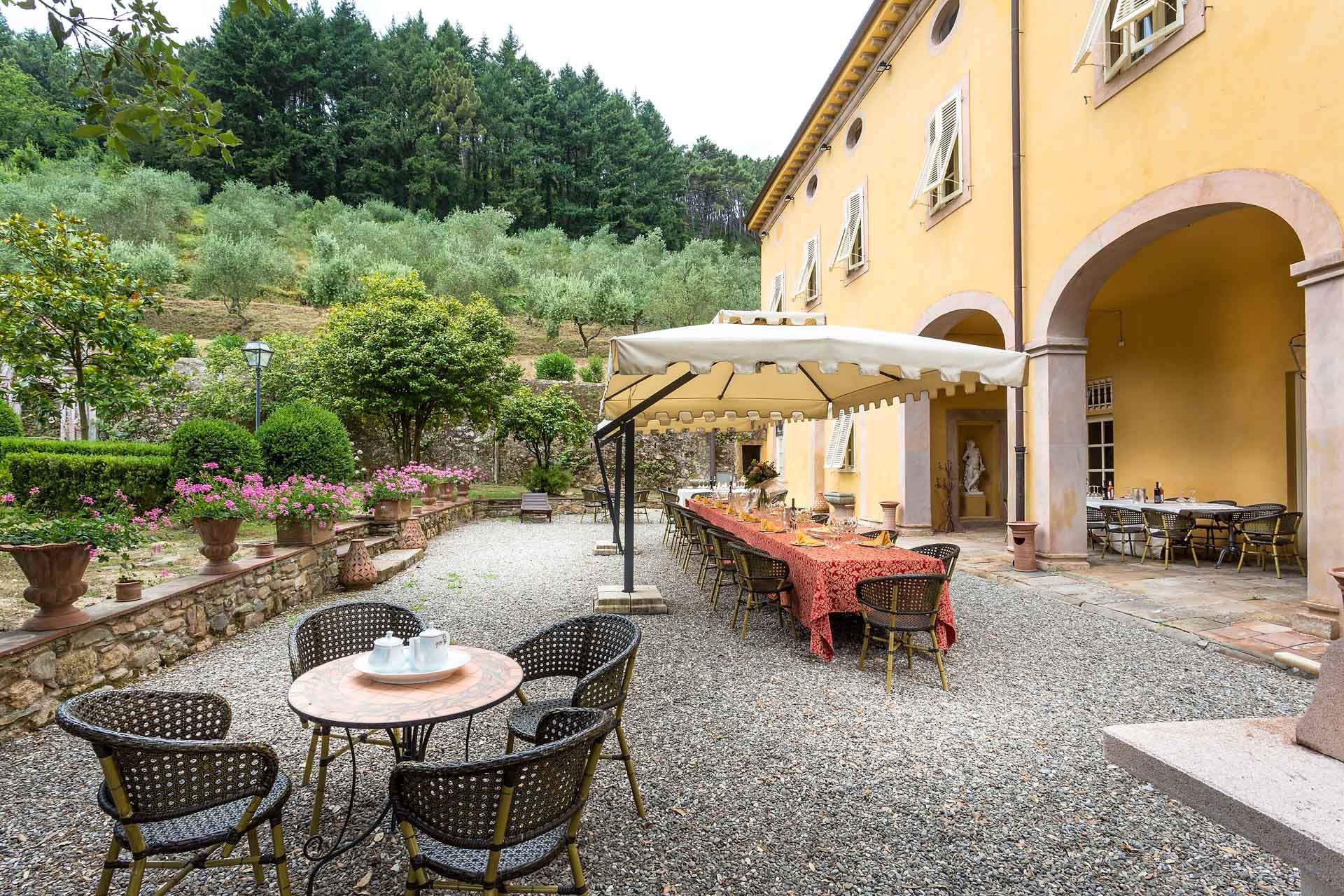
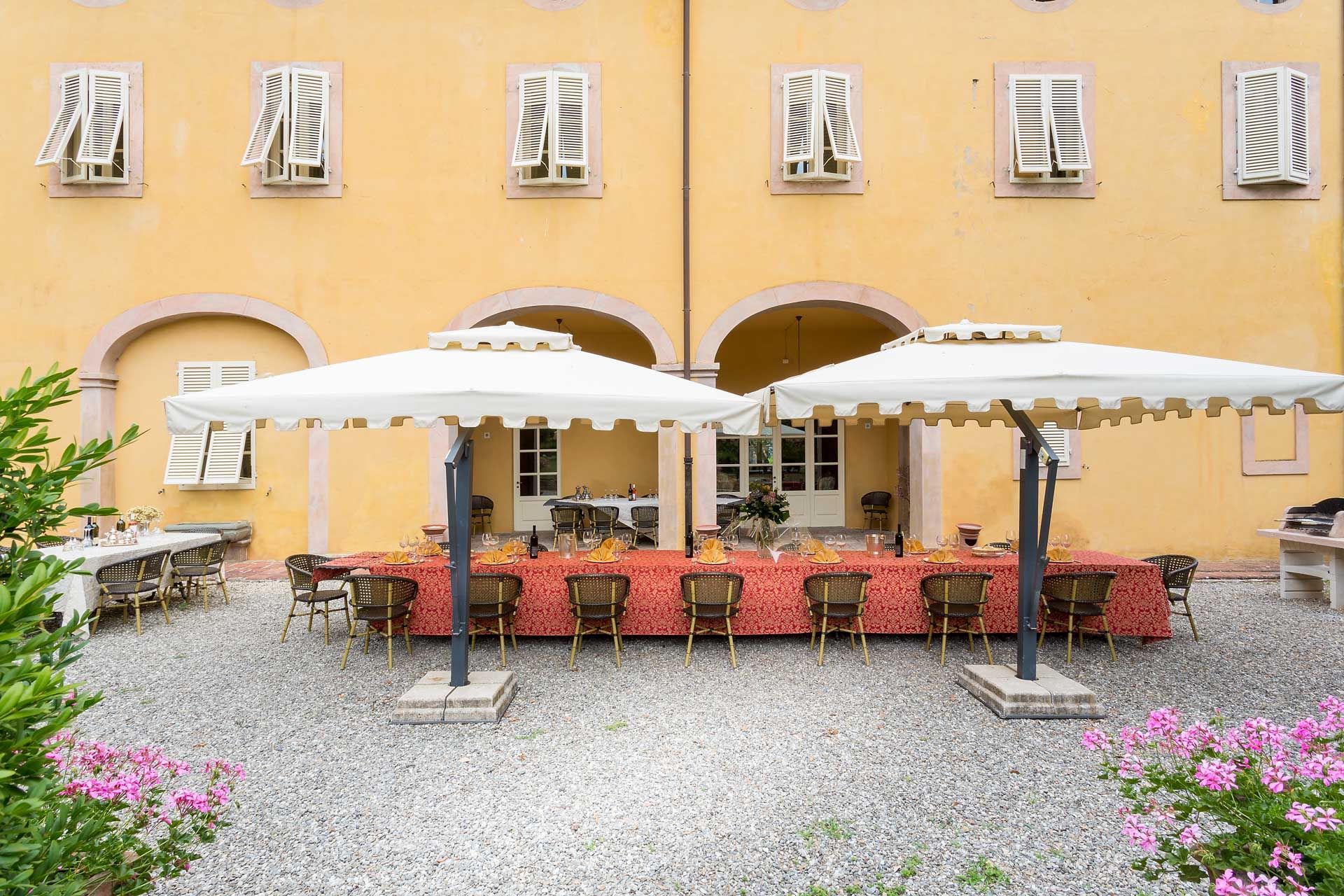
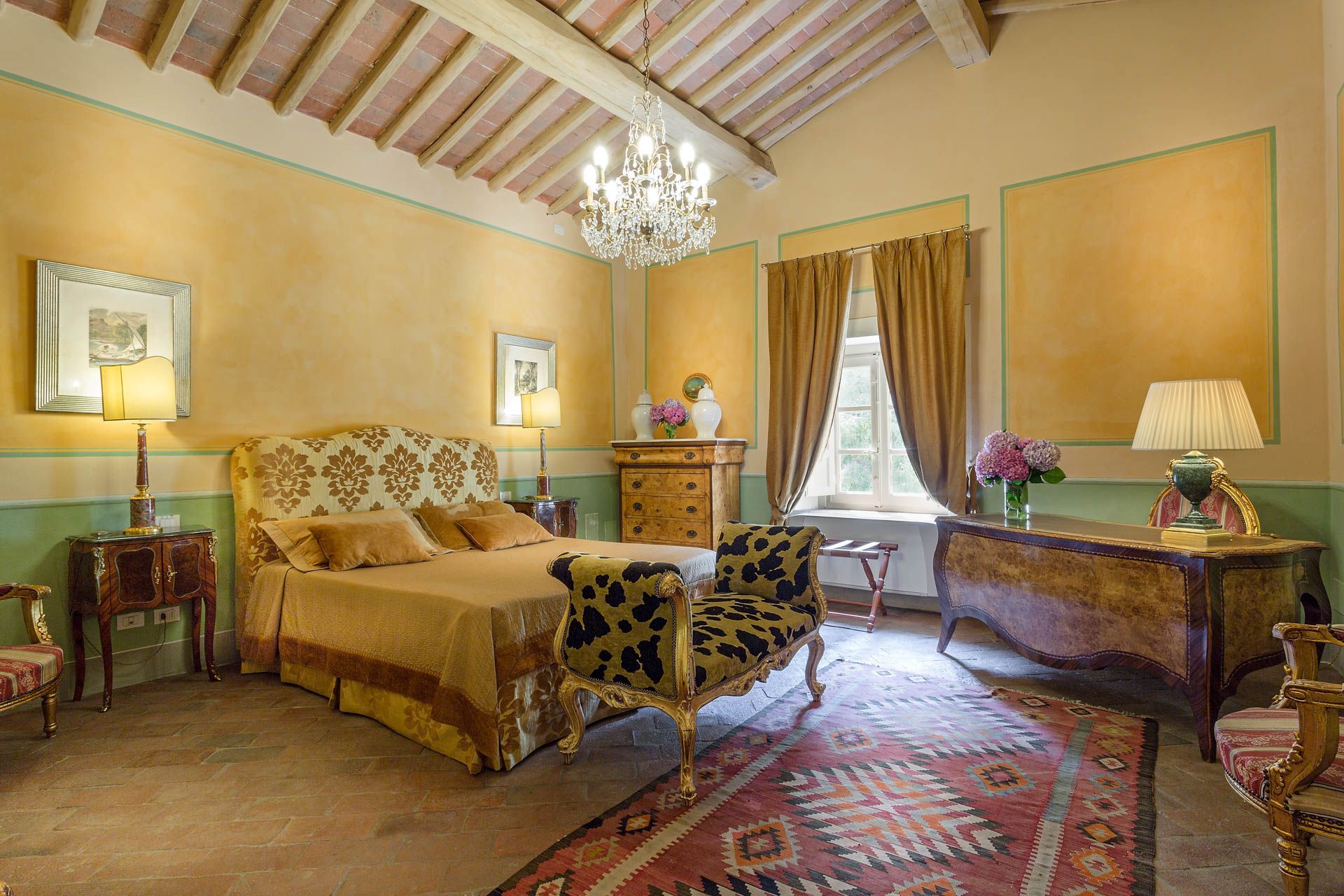
In harmony with the villa’s serene ambiance, the interiors are tastefully appointed with elegance and allure, offering twelve fresco-adorned guestrooms, each with ensuite facilities, accommodating up to twenty-four guests. Boasting three lounges, a study nook, a billiard room, a magnificent banquet hall, and the inviting seclusion of an arched loggia, the villa provides ample space for larger groups to gather or seek moments of solitude.
Historically, Monte Pisano has been a significant battleground in the protracted conflicts between Pisa and Lucca spanning over four centuries since the turn of the millennium. Constructed as the summer abode of the Controni family, esteemed merchants who assumed ownership of what is now Palazzo Pfanner in central Lucca in 1680, the villa has hosted notable guests, including Prince Frederick of Denmark and Norway during his Grand Tour of Italy in 1692. Over the years, the fertile grounds, which once housed workers’ quarters, a chapel, stables, and an olive oil mill, were renowned for cultivating rare blooms. Notably, the estate gained prominence as the residence of Mr. Felice Matteucci, credited as the progenitor of the combustion engine, with its invention in 1853.